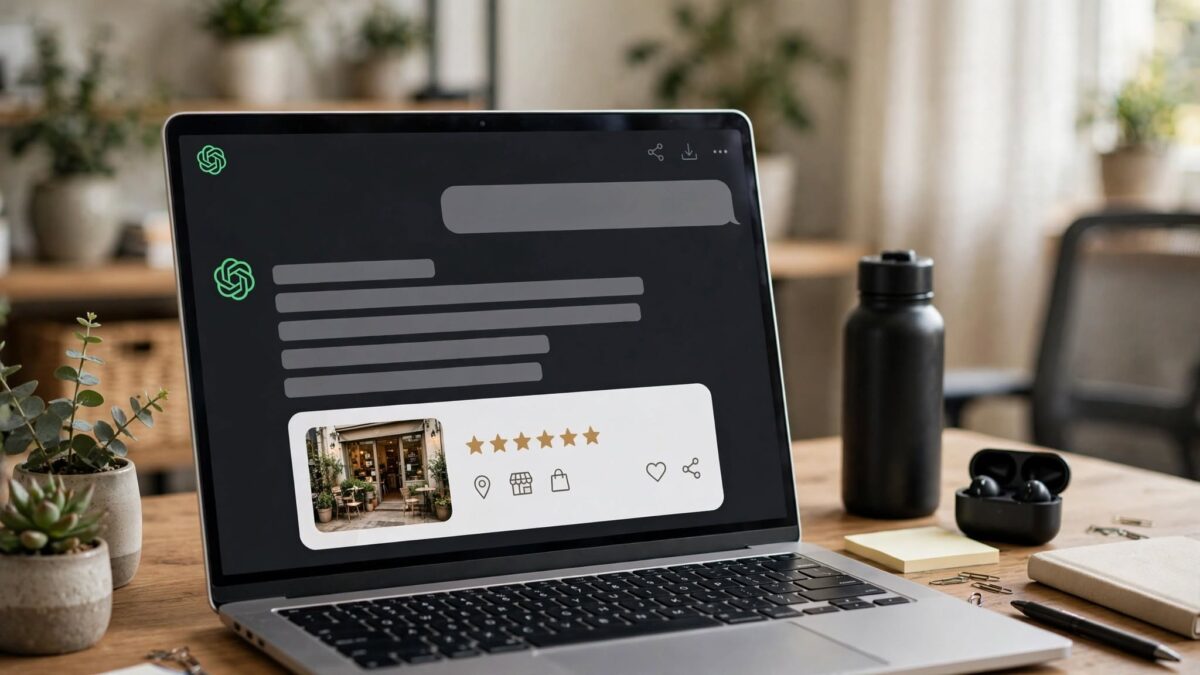
ChatGPT ads are open to small businesses through OpenAI’s self-serve Ads Manager in 63 countries as of 9 Oct 2026, from a minimum daily budget of $25. Two catches matter more than the price. The ads only reach people on the Free and Go plans, so paying ChatGPT users never see them. And no conversion-rate data for ad clicks has been published yet. Run a small, capped test before moving any real budget.
OpenAI announced ads in January 2026 and started with big brands. Early trade reports put the entry ticket at a $200,000 commitment. In May OpenAI began opening its self-serve Ads Manager to smaller advertisers, starting in the US. On 31 August OpenAI said the ad business had passed a $1 billion annualised run rate in under 200 days, with “tens of thousands of advertisers”, and that small and medium-sized businesses now make up a “material share” of them. OpenAI’s Ads Manager availability page now lists 63 countries for self-serve buying, including the UK, most of the EU, India, Saudi Arabia, the UAE, Turkey and much of Southeast Asia. Pakistan isn’t on it yet.
So you can buy ChatGPT ads now. Whether they’re worth buying for your business comes down to who sees them, what a test costs, and how little anyone yet knows about results.
Who will actually see your ad
This is the part most coverage skips. OpenAI’s advertising principles say ads are for logged-in adults on the Free and Go plans. Plus, Pro, Business and Enterprise subscriptions “will not include ads”.
| Who | Sees ChatGPT ads? |
|---|---|
| Free and Go users, logged in, adults | Yes, when a relevant ad exists for the conversation |
| Plus and Pro subscribers | No |
| ChatGPT Business and Enterprise seats | No |
| Users who say, or whom OpenAI predicts, are under 18 | No |
| Anyone in a conversation about health, mental health or politics | No. Ads aren’t placed next to those topics |
For a café, a plumber or an online shop selling to the public, that audience is fine. OpenAI describes its free tier as ad-supported and says ChatGPT has more than 1 billion weekly users, so the reachable pool is large. For a business that sells to other businesses, it’s a problem. The office manager researching software on a company ChatGPT Business seat won’t see your ad, and neither will the consultant paying for Plus. If your best customers pay for ChatGPT, these ads skip them by design. Our breakdown of ChatGPT’s plans covers who tends to be on which one.
Matching happens through conversation, not keywords you bid on. OpenAI says an ad shows when there’s a relevant sponsored product “based on your current conversation”. Its August post adds that, depending on the country and the user’s settings, targeting can also draw on the user’s wider ChatGPT history. The ad appears as a labelled card below the answer, not inside it. OpenAI says ads don’t influence the answer itself, so paying won’t get your business named in the reply. Being the source ChatGPT cites is a separate job, and it rewards the kind of original material we describe in our guide to SEO content that isn’t robotic.
What a ChatGPT ads test actually costs
OpenAI’s campaign setup help lists three objectives. Views is billed per thousand impressions (CPM). Clicks is billed per valid click (CPC). Conversions optimises toward an action such as a sale or a lead, but you are still billed per click or per thousand impressions. The help page says plainly: “You do not pay per conversion.”
| Billing currency | Minimum daily budget |
|---|---|
| US dollar | $25 |
| Euro | €15 |
| British pound | £15 |
| Canadian / Australian dollar | 25 |
| Japanese yen | ¥2,500 |
| Indian rupee | ₹725 |
Read the fine print on “daily”. OpenAI treats a daily budget as a seven-day average. Any single day can spend up to twice the daily figure, and a Sunday-to-Saturday week can’t go over seven times it. A $25 daily budget can therefore cost $50 on a busy Tuesday. If you want a fixed ceiling for a test, OpenAI calls the campaign-total budget the “stricter control”.
OpenAI doesn’t publish typical prices. Trade reports put recommended starting bids at roughly $3 to $5 a click for consumer and ecommerce advertisers, and CPMs between about $25 and $60. Treat those as reported figures, not measured averages. Here’s what they imply, as our own arithmetic: running the $25 US minimum for 30 days costs about $750, and at $3 to $5 a click that buys roughly 150 to 250 clicks. That’s enough to learn something, but not enough to prove a channel.
The performance numbers don’t agree with each other
Every source below measured something different. None of them published a conversion rate for ChatGPT ad clicks.
| Source | What it reports | The catch |
|---|---|---|
| OpenAI (31 Aug 2026) | One ecommerce advertiser saw 3x return on ad spend over 28 days; one tech partner says over 80% of its ChatGPT ad traffic is new customers | Neither is named, and no method is given |
| Booyah, a US agency (30 Jun 2026) | Click-through rate near the cross-platform average (index 95), but cost per click the highest of the platforms it runs (index 238, against 43 for Meta and 134 for Google Performance Max non-brand) | Index values only, no sample size; one agency’s own clients |
| eMarketer, cited by Tru Commerce (Aug 2026) | About 0.9% click-through, against about 6.4% for Google search ads | Sample not stated; we didn’t read the original |
| Tru Commerce’s own campaigns (Aug 2026) | About 1.3% average click-through | Sample not stated |
| Criteo beta sample, cited by Tru Commerce | About 4.7% click-through per product ad | Around 3,850 ad displays; one product creative, not a whole account |
Watch for one figure in sales decks. Adobe reported in 2025, as cited by Tru Commerce, that shoppers arriving from ChatGPT converted at 15.9%, against 1.76% from Google organic search. That was free referral traffic from ChatGPT answers, not paid ad clicks. People who click a link inside an answer they asked for are a different group from people who tap a sponsored card underneath it. Anyone using that figure to sell you ChatGPT ads is mixing the two.
The fair reading as of October 2026: click rates look closer to social ads than to search ads, clicks look expensive, and nobody has published what those clicks are worth. Booyah itself says it is still studying whether the engagement converts well enough to justify the price.
What you can’t advertise
OpenAI’s ad policies (version 1.6, updated 10 September 2026) rule out more small-business categories than you might expect:
- Banned outright: gambling, adult content and dating apps, alcohol above 0.5%, tobacco and vaping, cannabis and other recreational drugs, political ads, and sensitive topics such as immigration, religion and gender identity.
- US only, approved case by case: financial services, health services and legal services. Outside the US these are “generally prohibited”, and lawyers must be licensed where the ad shows.
- Individual listings: single job openings and single property rentals or sales are prohibited. A recruiter or estate agent can promote a platform that hosts listings, but not one specific listing. That rules out the obvious play from our guide on AI for real estate agents, and the same goes for the job-ad side of AI in hiring.
- Landing pages count: the rules apply to the page your ad links to as well as the ad itself.
Two country rules also matter. The legal entity that pays for the ads must be based in a listed country. And new self-serve accounts can at first advertise only in their home country, until identity verification clears and they reach a spending threshold the help page doesn’t specify.
If you test it, test it this way
For a local or consumer business that passes the checks above, a test is cheap enough to try. Set it up so the result means something:
- Install measurement first. Put OpenAI’s pixel or Conversions API on your site before spending anything. Otherwise you’re paying for clicks you can’t follow.
- Pick one offer and one place. Most campaigns can target down to a city or postal code. Product-feed campaigns are country-level only.
- Choose Clicks with a fixed maximum bid, and a campaign-total budget. That’s the most predictable setup: you set the most you’ll pay per click and the most you’ll spend in total.
- Write the kill rule before launch. For example: stop if cost per lead after 150 clicks is above what Google Search or Meta costs you for the same offer.
- Keep ChatGPT ad clicks separate from free ChatGPT referrals in your analytics. Otherwise the free traffic makes the paid traffic look better than it is. Our guide to detecting AI agent traffic explains why ChatGPT-driven visits are already hard to read in standard analytics.
Online shops have a separate route through product feeds, carousels and a Shopify app, much like the shopping formats we covered in our AI ecommerce tools piece. Our AI shopping agents article covers the open questions about agent-driven checkout that still apply here.
Who should wait
Wait if you sell mainly to businesses, because their staff are likely on paid ChatGPT plans that never show ads. Wait if you’re in finance, health or legal outside the US, or if your product is one listing or one job, because the policy shuts you out. And wait if you can’t measure a lead from click to sale, because a channel with no published conversion data needs your own numbers before it gets your money.
OpenAI’s other small-business offer, dots, is a seat you pay for rather than an audience you buy. If you’re weighing where OpenAI spend goes, our OpenAI dots review covers that side.
What we couldn’t confirm
- Conversion rates for ChatGPT ad clicks. Neither OpenAI nor any independent source we found has published one.
- Typical costs per click today. The $3 to $5 range comes from trade reports of recommended starting bids. OpenAI’s help pages don’t list prices.
- Which countries and settings let ads use a user’s wider ChatGPT history. OpenAI says it “depends” without listing them.
- How often ads appear. Similarweb reportedly found an ad on 26% of answers to Free and Go users (via PPC Land, August 2026); we haven’t checked the underlying data.
- Who OpenAI’s two success stories are, and how they measured.
- How long ad review takes, and the spending threshold new accounts must reach before advertising abroad.
- When Pakistan and other unlisted countries will get self-serve access. OpenAI’s page only offers a sign-up to be notified.
- Whether ads have since reached paid plans. OpenAI’s January principles are the latest plan-level statement we found, and later posts haven’t changed it.
FAQ
How much do ChatGPT ads cost?
There’s no fixed price. Self-serve campaigns need a minimum daily budget of $25 in the US (€15, £15, ₹725 elsewhere), and you pay per click or per thousand impressions. Trade reports put starting bids at roughly $3 to $5 per click, but OpenAI doesn’t publish rates.
Who sees ChatGPT ads?
Logged-in adults on the Free and Go plans. Plus, Pro, Business and Enterprise users don’t see ads, nor do users under 18 or anyone in conversations about health, mental health or politics.
Can I advertise on ChatGPT if my business isn’t in the US?
Yes, if your legal entity is in one of the 63 countries on OpenAI’s Ads Manager availability page as of 9 October 2026, which includes the UK, most of Europe, India, Saudi Arabia and the UAE. New accounts start in their home country only. Pakistan isn’t listed yet.
Do ChatGPT ads change ChatGPT’s answers?
OpenAI says no. Ads are labelled and shown separately below the answer, and paying doesn’t get your business mentioned in the response itself.
Can a local business target just one city?
Yes, for most campaign types. OpenAI’s help page lists targeting by state or region, city, market and postal code where available. Product-feed campaigns are limited to country-level targeting.
Do I pay only when someone buys?
No. Even Conversions campaigns are billed per click or per thousand impressions. OpenAI’s help page states that you do not pay per conversion.
Shurah is the founder of AI Tools Daily, tracking pricing, licensing and policy changes across AI tools so readers can make decisions without wading through marketing claims themselves.