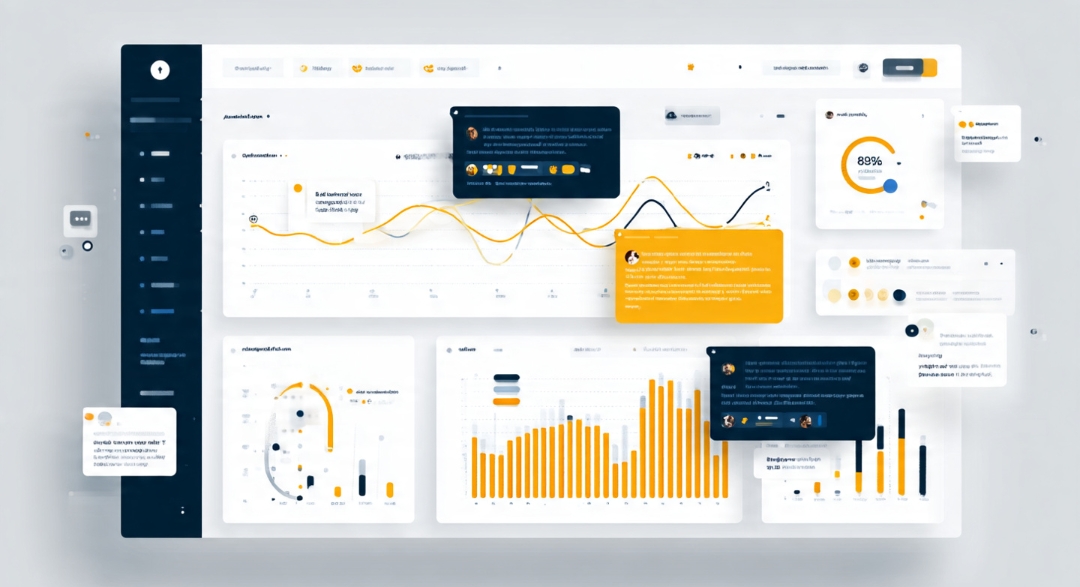
Every social media listening tool sells you a dashboard that looks complete. Mentions across every platform, a sentiment score, a tidy trend line. It looks like a census of what people say about you.
It isn’t. It’s a sample, drawn from whichever platforms still permit commercial access, filtered through a cap you probably didn’t read. In 2026 the gap between what these tools show and what’s actually being said has widened considerably — not because the tools got worse, but because the platforms closed the doors.
Knowing exactly which doors closed is what separates a useful monitoring setup from an expensive false sense of security.
The 2026 access map
Two changes reshaped this market, and neither was announced as a change to social listening.
X moved to pay-per-use pricing. After a pilot in late 2025, the model rolled out broadly in February 2026, with per-post read charges reported around half a cent and fixed tiers still available alongside. For read-heavy monitoring — which is exactly what listening is — that makes X structurally more expensive than it was, with reported costs for serious monitoring running from a few hundred to several thousand dollars a month.
Reddit’s Data API is free only for non-commercial use. Commercial access requires an approval process that isn’t self-serve. Rate limits sit at around 100 queries per minute for authenticated clients and 10 for unauthenticated ones, per OAuth client ID rather than per end user, averaged over a ten-minute window.
And a third, less discussed: TikTok offers no commercial keyword-search API. Its research API is closed to commercial users entirely.
| Source | Commercial access in 2026 |
|---|---|
| X | Available, pay-per-use since February 2026 — cost scales with read volume |
| Approval required; free tier is non-commercial only | |
| TikTok | No commercial keyword search. Anything you see is scraped or partial |
| Meta platforms | Owned-account data is accessible; broad public search is not |
| YouTube | Genuinely accessible, and under-used |
| Review sites, forums, news, podcasts | Broadly accessible — and where most substantive complaints actually live |
Read that table before you read any vendor’s feature list. A tool cannot show you what the platform doesn’t sell.
Three claims that can’t be true
“Monitors all social media.” Given the map above, this is a claim about ambition rather than coverage. Ask specifically which platforms are covered by licensed API access, which by partial or scraped data, and which are simply absent.
“Includes historical data.” Historical backfill is frequently a separate data licence, priced separately. Free and entry tiers commonly restrict you to the last seven days, which makes seasonal comparison and post-campaign review impossible — you can react to today with no context from last quarter.
“Unlimited mentions.” Almost never. What exists is a mention cap, and what happens at the cap matters more than the number: overage charges, a forced upgrade, or silent truncation. The last one is the dangerous option, because your dashboard keeps looking healthy.
And here’s the timing problem nobody warns about: you hit your cap during a crisis. Mention volume spikes exactly when a problem is spreading, which is precisely when your monitoring quietly stops being complete. Ask what happens at 100% of quota before you sign, the same way you’d interrogate any metered tool.
Sentiment analysis is a change detector, not a score
This is the single most useful reframe in this article, so it’s worth being blunt: the absolute sentiment number is close to meaningless. The delta is the whole product.
“Your brand is 71% positive” tells you nothing you can act on. You don’t know what 71% would be for a competitor, or what it was before, or what the classifier does with the specific way your customers write. But “you were at 71% on Tuesday and 45% on Wednesday” is an alarm, and alarms are what you’re buying.
The reason the absolute number can’t be trusted is that sentiment classification fails in predictable ways:
| Failure | Example of what breaks |
|---|---|
| Sarcasm and irony | “Great, another outage” scores positive |
| Negation and conditionals | “Not bad at all” and “would have been good if” both confuse classifiers |
| Mixed sentiment | “Love the product, support is terrible” collapses to one label and loses the actionable half |
| Domain vocabulary | “Sick”, “killer”, “insane” are praise in some communities and complaints in others |
| Comparative mentions | “Better than X” is positive for you and negative for X — frequently attributed to the wrong brand |
| Non-English and code-switched text | Accuracy drops sharply outside the languages the model was tuned on |
Two practical rules follow. First, establish a baseline over at least a month before you draw any conclusion — without it you have a number and no meaning. Second, read a sample by hand every week. Fifty mentions, twenty minutes. You’re checking whether the classifier understands your customers’ vocabulary, and you’ll usually find within two weeks that it doesn’t in some specific, fixable way.
Modern tools score sentiment with language models rather than keyword lists, which improves sarcasm handling considerably. It doesn’t eliminate the problem, and it introduces the familiar one: a confident, fluent, wrong classification looks identical to a correct one. The verification habits in fact-checking AI-generated content apply here too.
The channel you’re probably not monitoring
Here’s the genuinely new problem of 2026, and no social media listening tool covers it.
When someone asks an AI assistant whether your product is any good, they get an answer. That answer is a reputational event with real commercial consequences, and it appears in exactly none of your dashboards. There is no mention feed, no timestamp, no alert.
It behaves differently from social in three ways that matter:
- There’s no record. A bad tweet exists somewhere and can be found. A bad answer is generated, delivered and gone.
- It varies by phrasing. “Is X reliable” and “X alternatives” can produce materially different characterisations of the same company.
- The sources aren’t your website. Assistants lean on reviews, forum threads, comparison articles and documentation — often the exact places your marketing team doesn’t own. This is the same decoupling described in writing SEO content with AI: what ranks and what gets cited have separated.
Until tooling matures, the honest answer is a manual protocol, monthly, taking about an hour:
- Write the ten questions a real buyer would ask — including the unflattering ones: “is X worth the money”, “why do people cancel X”, “X vs [competitor]”.
- Ask all ten across two or three assistants, in fresh sessions with no personalisation.
- Log the answer, and log which sources it drew on.
- Fix the sources, not the answer. A wrong claim usually traces back to a specific outdated page, a stale comparison article or an unanswered review. That page is the thing you can actually change.
That last step is the whole value. You can’t edit an assistant’s output, but you can very often edit its input — which is the same structural argument made for product feeds in AI ecommerce tools that increase sales and for listings data in AI for restaurants.
What to actually buy
| Situation | Sensible option |
|---|---|
| Solo or very small business | Free alerts plus manual checks on review sites and YouTube comments. Genuinely sufficient at low mention volume |
| Small brand with real online conversation | A mid-market monitor in the roughly $30–100/month band — check the mention cap and the historical window first |
| Agency reporting to clients | A tool with export and white-labelled reporting; the reporting is what you’re paying for |
| Developer-heavy team | Build it: owned-account APIs, YouTube, RSS, review sites and alerts, with model-based sentiment on top |
| Enterprise with a crisis mandate | A full suite. Expensive, and the only option with multilingual depth and governance |
The build route deserves a mention because it’s more viable than it sounds. The sources that remain genuinely open — your own account APIs, YouTube, RSS feeds, review platforms, news alerts — cover a surprising amount of what matters, and language-model sentiment scoring on top of them is a weekend’s work rather than a project. What you can’t build cheaply is broad X and TikTok coverage, and you should be honest with yourself that you’re skipping it rather than pretending the map is complete.
Whatever you choose, remember that most substantive complaints don’t happen on the platforms that are hardest to access. They happen in reviews, support tickets and forum threads — which is also where the research value is, as covered in using AI for market research.
A minimum viable setup
- Alerts on your brand name, product names and common misspellings. Free, five minutes, catches most of what matters at small scale.
- Review sites checked weekly, with replies written by a person. The reply is the product, not the monitoring.
- YouTube comments on videos that mention you — accessible, high-signal, almost universally ignored.
- Your own support tickets and site search queries, read monthly. Highest-signal source you own and the one you already have.
- The monthly assistant check described above.
- Only then, a paid tool — once you know your actual mention volume and can size the cap correctly.
Steps one through four cost nothing and cover most of the ground for a small business. Buying a platform before you know your volume is how teams end up paying for a cap they never approach, or discovering mid-crisis that they bought one far too small. The publishing side of this sits in AI tools for social media management, and competitor tracking specifically in analysing a competitor’s content strategy. For the wider stack, the best AI tools for small business owners is the map.
Frequently asked questions
Why do social listening tools miss so many mentions in 2026?
Because platform access changed. X moved to pay-per-use API pricing in February 2026, making read-heavy monitoring structurally more expensive; Reddit’s free Data API is non-commercial only, with commercial access behind an approval process; and TikTok offers no commercial keyword-search API at all. Any tool’s coverage is bounded by what the platforms actually sell.
Can I trust an AI sentiment score?
Treat it as a change detector rather than a measurement. The absolute figure is unreliable because classifiers stumble on sarcasm, negation, mixed sentiment, community-specific vocabulary and comparative mentions. A sudden move in the score is a genuine signal; the number itself isn’t. Establish a baseline over at least a month and hand-read a sample weekly.
What should I ask before buying a social listening tool?
Which platforms are covered by licensed API access versus partial or scraped data; how far back the historical window goes and whether backfill costs extra; what the mention cap is and what happens when you hit it. That last question matters most, because volume spikes during a crisis, which is exactly when truncation hurts.
How do I monitor what AI assistants say about my brand?
Manually, for now. Once a month, ask ten realistic buyer questions — including unflattering ones — across two or three assistants in fresh sessions, and log both the answers and the sources cited. Then fix the sources rather than the answers: wrong claims usually trace to a specific outdated page, stale comparison article or unanswered review.
Is free social listening enough for a small business?
Often, yes. Brand-name alerts, weekly review-site checks, YouTube comments and your own support tickets cover most of what a small business needs, and cost nothing. Paid tools earn their price when mention volume is high enough that manual review stops being feasible — measure that before you buy, not after.
Is social listening the same as social monitoring?
Monitoring is reactive — catching individual mentions so you can respond. Listening is analytical — looking across many mentions for themes, shifts and unmet needs. Most small businesses need monitoring first, because responding well to one unhappy customer usually beats a dashboard nobody reads.